For the global Hindu diaspora, the call of the ancestors—the Pitrus—often feels like a silent, persistent tug at the soul. Living in cities like New York, London, or San Francisco, the ancient traditions of the Ganges can feel worlds away. Yet, when a loved one passes, or when life feels inexplicably stalled by what the Vedas call Pitru Dosha, the heart inevitably turns back to the two holiest pillars of the Sanatana Dharma: Kashi and Gaya.
But where should you perform the final rites? Is one "better" than the other? As we navigate the spiritual geography of India, we find that Kashi and Gaya are not competitors, but two halves of a divine celestial mechanism designed to liberate the soul.
The Spiritual Crisis: Why Ancestral Rites Matter in the Modern World
Many NRIs ask, "Why does a ritual performed in India matter to my life in the West?" The answer lies in the metaphysical DNA of your lineage. According to the Garuda Purana, a soul that has not been properly transitioned through Pind Daan remains in a state of Preta (a restless, earth-bound spirit).
The Signs of Unresolved Pitru Dosha:
- Constant Obstacles: Success that remains just out of reach despite hard work.
- Family Discord: Unexplained friction between generations.
- Lack of Progeny: Difficulties in continuing the family line.
- Vague Anxiety: A sense of being "unanchored" or spiritually adrift.
Ignoring these rites isn't just a lapse in tradition; it is a break in the energetic circuit of your family. Performing Pind Daan is the act of "paying the debt" (Pitru Rin) we owe to those whose DNA we carry.
Kashi: The Gateway to Mukti (Liberation)
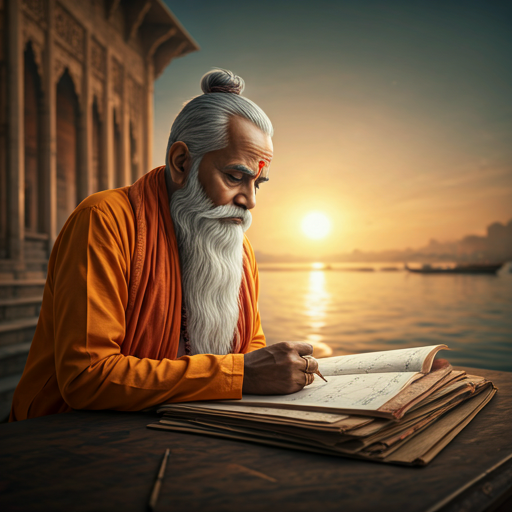
In the narrow, incense-laden lanes of Varanasi, time doesn’t move in a straight line—it circles the eternal. Kashi is the city of Lord Shiva, the Mahashmashana (The Great Crematorium). Here, death is not feared; it is celebrated as a transition.
The Significance of Kashi Pind Daan
Performing Pind Daan at Manikarnika Ghat or Assi Ghat is about the immediate liberation of the soul. Shiva is said to whisper the Taraka Mantra into the ears of those who pass here, ensuring they never have to return to the cycle of rebirth.
Sanskrit Shloka:
“Kashyam Maranam Muktih”
Translation: Death in Kashi is Liberation.
The Ritual Atmosphere
Imagine the sound of the evening Aarti echoing off the stone steps, the heavy scent of sandalwood paste, and the sight of thousands of oil lamps floating on the dark silk of the Ganga. In Kashi, the ritual is deeply personal and intensely powerful, focusing on the soul’s journey into the light of Shiva.
Gaya: The Finality of the Pind Daan
While Kashi is about the "process" of liberation, Gaya is about the "completion." According to the Vayu Purana, Lord Vishnu granted Gaya the power to absolve any soul of its sins if Pind Daan is performed here.
The Legend of Gayasur
Gaya is named after the demon Gayasur, who became so holy that anyone who touched him went to heaven. To stabilize this power, Lord Vishnu placed his foot upon him. Today, the Vishnupad Temple marks this spot.
The "Final" Ritual
Gaya is often where the "Akshaya Vata" (The Immortal Banyan Tree) resides. It is said that once you perform Pind Daan here, the soul is permanently settled in Pitru Loka or Vaikuntha. For many families, Gaya is the "destination" after the initial rites in Kashi.
Kashi vs. Gaya: A Comparative Analysis for the Global Hindu
| Feature | Pind Daan in Kashi (Varanasi) | Pind Daan in Gaya (Bihar) |
|---|---|---|
| Primary Deity | Lord Shiva (The Destroyer/Transformer) | Lord Vishnu (The Preserver) |
| Core Philosophy | Immediate Moksha and liberation from rebirth. | Settling ancestral debts and permanent peace. |
| Key Location | Manikarnika Ghat, Scindia Ghat. | Vishnupad Temple, Falgu River. |
| Atmosphere | Vibrant, chaotic, intensely spiritual. | Somber, ritualistic, focused on lineage. |
| Frequency | Can be done annually or during Pitru Paksha. | Traditionally done once as a "final" settlement. |
The Science of the Ritual: Why Rice, Sesame, and Kusha?
Vedic rituals are not "superstition"; they are a form of spiritual technology.
- Black Sesame (Til): These act as "conductors" for the subtle energy of the Pitrus. Their dark color represents the absorption of negative karma.
- Pinds (Rice/Barley Balls): These represent the physical body. By offering them, we nourish the "subtle body" of the ancestor.
- Kusha Grass: Scientifically known as Desmostachya bipinnata, this grass is a natural purifier and acts as an "antenna" to focus the energy of the Vedic mantras.
The geometry of the ritual—sitting facing South (the direction of Yama)—creates a specific energetic alignment that allows the vibrations of the Sanskrit mantras to reach the intended frequency of the deceased.
Bridging the Distance: How SacredKashi Serves the NRI Community
We understand that a flight to India isn't always possible during a period of mourning or a busy work season. However, the Sankalpa (the holy intention) knows no geographical boundaries.
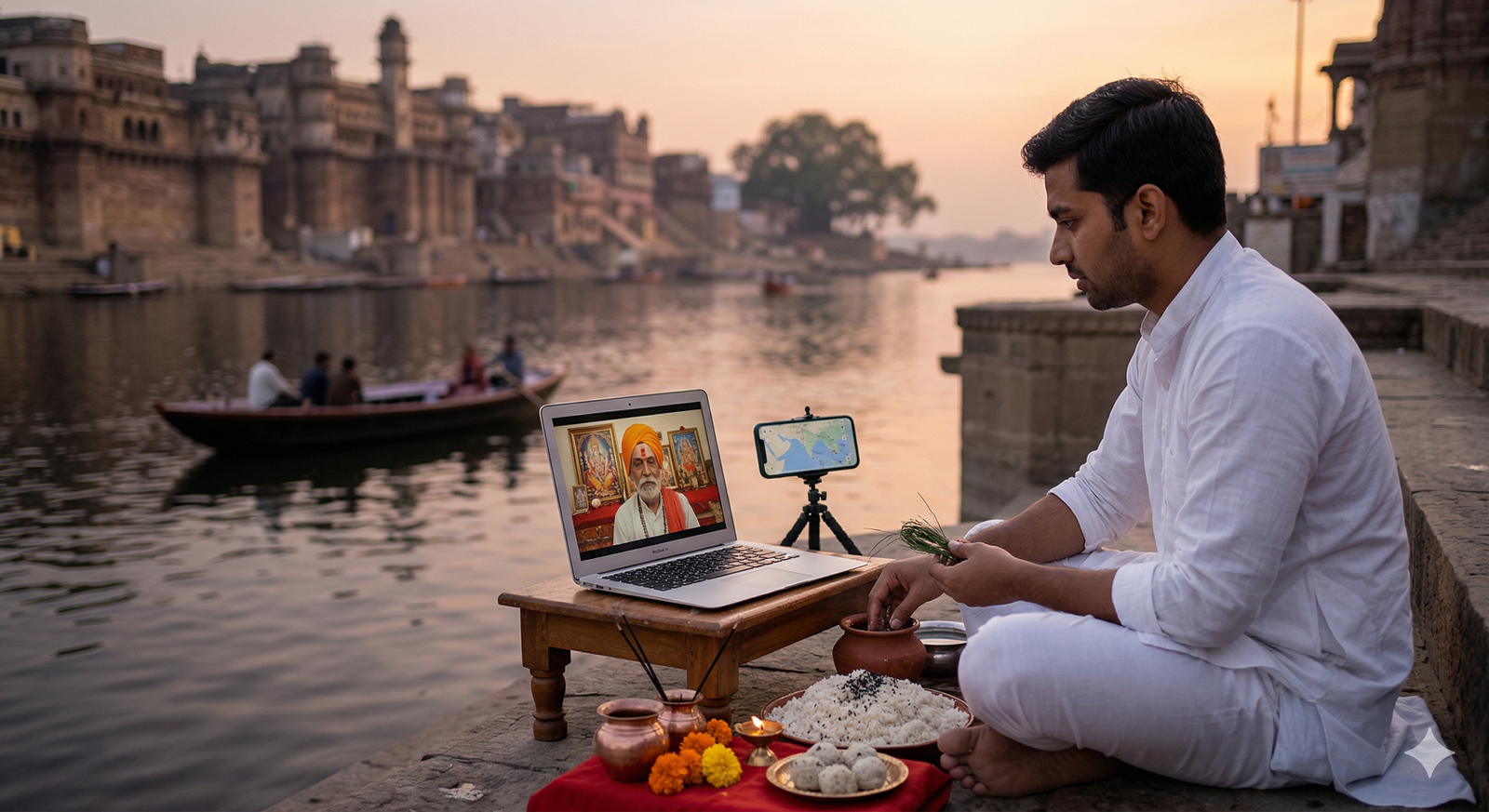
The Remote Sankalpa Process
- Digital Connection: You join our Acharyas via a high-definition video call from your home in the US or Europe.
- Naming the Lineage: You provide the names and Gotras of your ancestors.
- The Proxy Ritual: Our English-speaking Pundits perform the physical ritual on the banks of the Ganga in your name, while you participate by reciting specific prayers and mantras.
- Global Prasad: We ship the Prasad, sacred threads, and Ganga Jal to your international doorstep, ensuring you feel the presence of the ritual.
Frequently Asked Questions (People Also Ask)
1. Is Kashi or Gaya better for Pind Daan?
Neither is "better"; they serve different purposes. Kashi is for seeking the soul's liberation (Mukti) through Lord Shiva, while Gaya is for the final settlement of ancestral debts through Lord Vishnu. Many families perform rites at both.
2. Can a daughter perform Pind Daan?
Yes. The Dharma Sindhu and other Vedic texts allow daughters to perform these rites if there is no male heir, ensuring the lineage remains blessed and the ancestors find peace.
3. What is the best time for Pind Daan?
While Kashi is holy year-round, the Pitru Paksha (the 16-day lunar period in September/October) is the most potent time. Performing rites during an Amavasya (New Moon) is also highly recommended.
4. Do I need to be physically present in Varanasi?
While physical presence is ideal, a Remote Sankalpa is Shastra-valid. The intention (Bhav) and the correct vibration of mantras by a qualified priest are the most critical components.
5. Why use an English-speaking Pundit?
For the ritual to be effective, the performer must understand the meaning of the mantras. Our English-speaking Acharyas explain every step, ensuring the NRI family connects deeply with their heritage.
Conclusion: Honor Your Roots, Secure Your Future
The water of the Ganges does not just wash away the sins of the past; it waters the seeds of the future. When you honor your ancestors in Kashi or Gaya, you are clearing the path for your children and grandchildren. You are replacing the weight of Pitru Dosha with the light of Pitru Ashirwad (Ancestral Blessing).
Whether you find yourself drawn to the transformative fire of Kashi or the steady peace of Gaya, the journey begins with a single step of devotion.