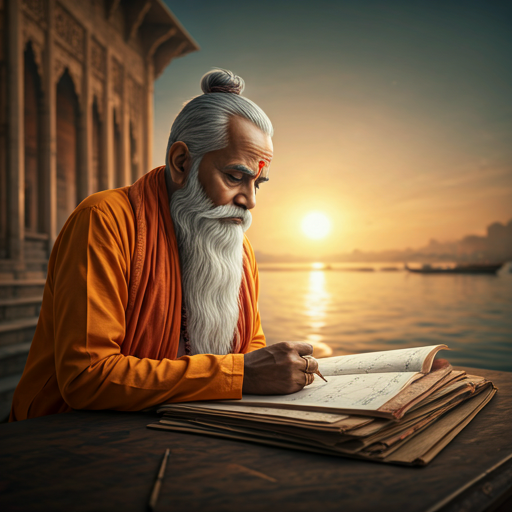
The bells of Kashi Vishwanath echo not just through the narrow lanes of Varanasi, but across the digital and spiritual ether, reaching every corner of the globe. For the Global Indian, the arrival of Pitru Paksha often brings a poignant mix of devotion and "diaspora guilt." You may be thousands of miles away from the sacred ghats of the Ganges, yet the pull of your lineage—your Pitrus—remains undeniable.
In the Vedic tradition, honoring one's ancestors is not merely a cultural ritual; it is a metaphysical necessity. Whether you are in London, New Jersey, or Sydney, the spiritual portal of Pitru Paksha remains open. This guide bridges the gap between ancient Vedic science and your modern global life.
1. The "Why": Understanding the Weight of Pitru Dosha
The Garuda Purana teaches us that our ancestors depend on the seasonal offerings of their living descendants to progress through the subtle realms. When we ignore this 16-day window, we often experience what is known as Pitru Dosha.
The Signs of Ancestral Unrest
- Unexplained Obstacles: Constant "blocks" in career or personal growth despite hard work.
- Family Discord: Frequent arguments without a logical cause.
- Health Patterns: Recurring hereditary ailments that defy medical explanation.
As the Shloka from the Dharma Sindhu states:
“Putra-nāma-narakāt trāyate iti putrah” (The son/descendant is one who protects the ancestors from the realm called 'Put' or hell.)
By performing Shradh, you are not just "doing a ritual"; you are clearing the energetic debts of your DNA.
2. The Metaphysical Science of Shradh
Many modern seekers ask: "How can a rice ball in India help my grandfather’s soul?" The answer lies in the vibration and the materials used. In Kashi, we call this the Science of Subtle Connectivity.
The Sacred Elements
- Black Sesame (Til): These seeds are considered the "seeds of immortality." They have the highest capacity to absorb and transmit Sattvic frequencies to the departed souls.
- Kusha Grass: Scientifically recognized for its conductivity, Kusha grass acts as an antenna, focusing the energy of the Mantras toward the specific soul mentioned in the Sankalpa.
- The Pind (Rice Balls): The Pind represents the physical body. By offering it, we provide a symbolic "vehicle" for the ancestor to receive nourishment and move toward Moksha (liberation).
3. The "Kashi" Edge: Why Varanasi is the Epicenter
While Shradh can be done anywhere, Kashi (Varanasi) is the Mahashmashana—the Great Cremation Ground where Lord Shiva himself whispers the Taraka Mantra into the ears of the departing.
Performing Pitru Paksha rituals at Manikarnika Ghat or Dashashwamedh Ghat is believed to amplify the merit of the ritual a thousandfold. The ancient resonance of this city ensures that the Tarpana (water offering) reaches the ancestors directly, bypassing the obstacles of the lower astral planes.
4. The Global Solution: How Remote Sankalpa Works
For many NRIs, traveling to India during the 16 days of Pitru Paksha is logistically impossible. SacredKashi has pioneered the Remote Video Sankalpa, a process that maintains Vedic integrity through modern technology.
Step-by-Step: Your Virtual Participation
- The Digital Sankalpa: You join our Acharyas in Kashi via a high-definition video call.
- The Identification: You state your name, your Gotra, and the names of your ancestors. This "tags" the ritual to your specific lineage.
- The Proxy Ritual: While you hold a glass of water and black sesame at your home abroad, our Pundits perform the full Vidhivat Pind Daan on the banks of the Ganga on your behalf.
- Brahman Bhoj: We conclude the ritual by feeding Vedic Brahmins and the poor in Kashi, ensuring the "Dana" (charity) aspect of the Shradh is fulfilled.
5. Logistics & Trust for the International Family
We understand the concerns of our global community regarding transparency and authenticity.
- Language Barrier: Our Acharyas are fluent in English, ensuring you understand every Mantra and its significance.
- Global Prasad: While the Pind is immersed in the Ganga, we send sanctified Prasad and sacred thread (Raksha Sutra) from the Kashi Vishwanath temple to your international address.
- Transparency: Every ritual is documented with high-quality photos and videos for your family records.
6. Frequently Asked Questions (FAQ)
Q1: Can I perform Pitru Paksha rituals if I don't know my Gotra? Yes. If the Gotra is unknown, the "Kashyapa Gotra" is used by default, as Vedic texts consider Rishi Kashyapa the progenitor of all humanity. Our Acharyas will guide you through this specific Sankalpa.
Q2: Is a remote ritual as effective as being there in person? In the realm of consciousness, intention (Bhav) and sound (Mantra) are not bound by geography. A Remote Sankalpa performed with full devotion is recognized by the Dharma Shastras as a valid substitute for physical presence.
Q3: What if I am a woman? Can I perform the Shradh? Absolutely. The Garuda Purana allows daughters and wives to perform Shradh if there are no male heirs or if the male heirs are unable to do so, ensuring the lineage is never starved of merit.
Q4: Which day of Pitru Paksha should I choose? If you know the Tithi (lunar day) of your ancestor's passing, perform it on that day. If not, the Sarvapitri Amavasya (the last day) is the most powerful day to honor all ancestors.
Q5: Can I perform rituals for ancestors who passed away outside India? Yes. Souls are not bound by physical borders. Regardless of where the body was laid to rest, the Tarpan performed in Kashi reaches them through the spiritual ether.