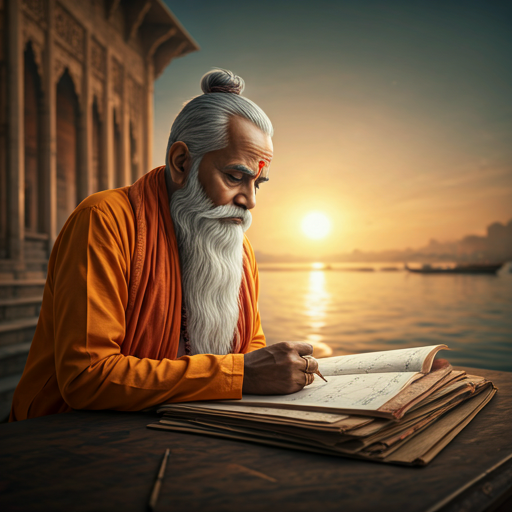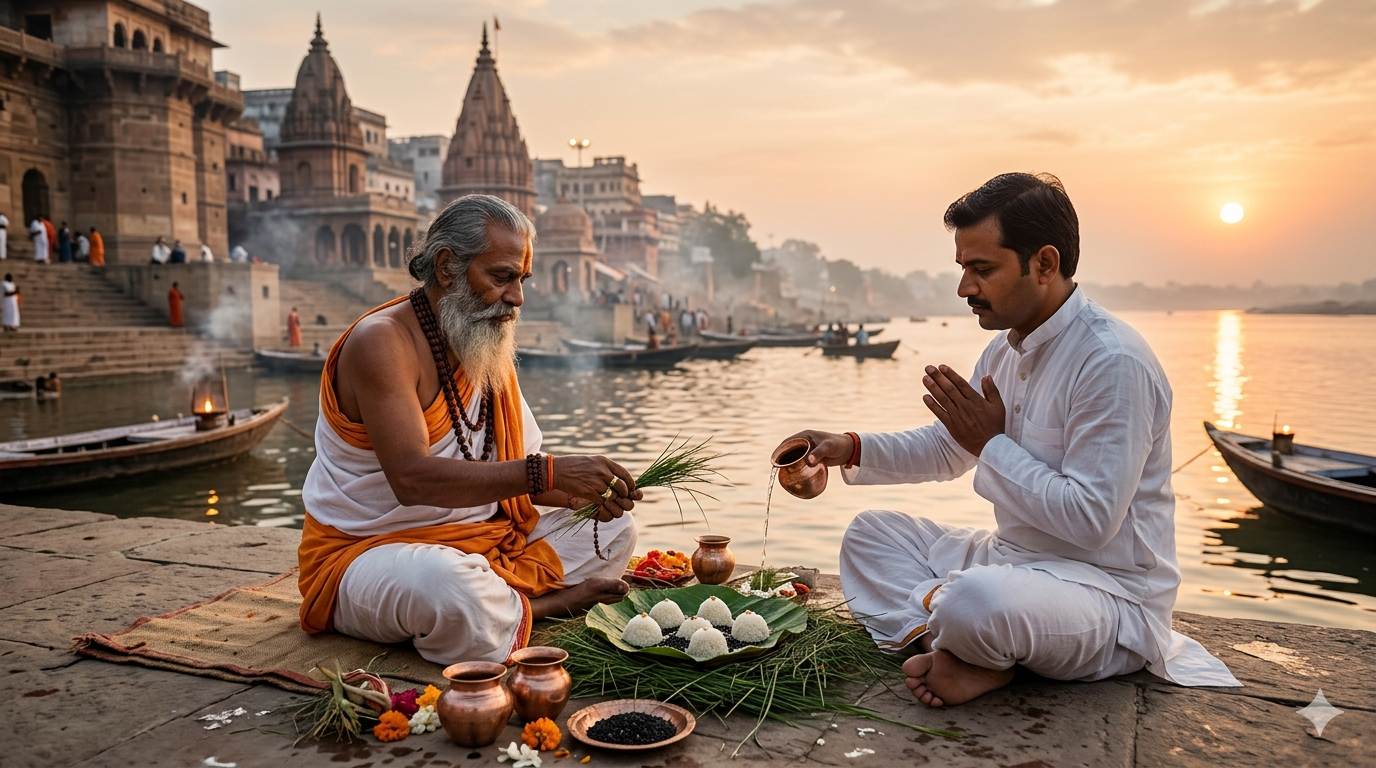
The air in Varanasi—the eternal city of Kashi—carries a weight that transcends time. It is a thick, resonant atmosphere where the smell of burning incense and sandalwood merges with the rhythmic, low-frequency chanting of Vedic mantras. To stand on the stone steps of the Manikarnika Ghat is to stand at the intersection of the physical and the metaphysical.
For over 300 years, our lineage of Acharyas has guarded the sacred protocols of the Antyesti and Shradh rites. We have seen the world change, yet the spiritual thirst of the human soul remains constant. As the world moves toward a digital age, the ancient science of Pind Daan—the ritual offering to ancestors—has never been more misunderstood, nor more vital.
The Weight of Ancestral Debt: Understanding Pitru Dosha
In the rush of modern life, we often feel an inexplicable heaviness—a series of "stuck" moments in our careers, recurring health issues, or a sense of disharmony within the family. While modern psychology offers one lens, the Dharma Sindhu and Garuda Purana offer another: Pitru Rin (Ancestral Debt).
Our ancestors are not just memories; they are the energetic foundation of our DNA. When a soul departs without the completion of specific Vedic rites, it remains in a state of Preta-loka (a restless, transitional state).
"Pitaro vakya micchanti, bhaktimicchanti dharmanah" > (The ancestors desire our words of remembrance; they crave the devotion of their descendants.)
Ignoring these rites leads to Pitru Dosha, a spiritual imbalance that can manifest as persistent life obstacles. Pind Daan is not merely a "funeral rite"; it is a sophisticated metaphysical technology designed to provide the departed soul with the "energetic fuel" required to transition toward Moksha (liberation).
Why Kashi? The Geography of Liberation
While Pind Daan can be performed in many places, Kashi is unique. It is said that Kashi sits on the tip of Lord Shiva’s trident, independent of the earth's karmic gravitational pull.
Performing Tarpana or Pind Daan at the Manikarnika or Assi Ghat ensures that the offerings reach the ancestors directly. The resonance of the Ganges—the Akasha Ganga—acts as a conduit, carrying the vibrational frequency of the mantras across dimensions.
The Metaphysical Science of the Ritual: Why Rice, Sesame, and Kusha?
Western observers often see the ritual as symbolic, but every element in a Vedic Shradh has a specific scientific function in the subtle energy realm.
1. The Pind (The Rice Ball)
The Pind is a symbolic representation of the human body. Made of cooked rice or barley flour mixed with ghee and honey, it acts as a "temporary vessel" for the soul to receive nourishment.
2. Til (Black Sesame Seeds)
Black sesame seeds are used because of their ability to absorb and hold Sattvic (pure) frequencies. In the Garuda Purana, it is explained that sesame seeds are the sweat of Lord Vishnu and have the power to ward off negative energies that might interfere with the soul’s journey.
3. Kusha Grass (Desmostachya bipinnata)
Kusha grass is a natural conductor of spiritual energy. By wearing a Pavitri (ring) made of Kusha grass, the performer of the ritual creates a circuit that prevents the loss of spiritual energy during the chanting of powerful Vedic Mantras.
The Step-by-Step Vidhi: How Pind Daan is Conducted
The process is a meticulous 16-step ceremony known as Shoradasha Shradh.
- Sankalpa: The priest helps you state your intent, lineage (Gotra), and the names of the departed.
- Tarpana: The pouring of water mixed with black sesame seeds, intended to quench the spiritual thirst of the ancestors.
- Pind Pradan: The offering of the rice balls on a bed of Kusha grass.
- Vishnu Puja: Invoking Lord Vishnu as the witness and protector of the soul’s journey.
- Brahman Bhoj: Feeding the Vedic scholars, which serves as a medium for the ancestors to receive the "essence" of the food.
Bridging the Gap: Remote Sankalpa for the Global Indian (NRI)
We understand that for the Indian diaspora in the USA, UK, or Australia, traveling to the banks of the Ganges isn't always immediate. However, the Shastras provide for Pratinidhi (representation).
Through a Remote Sankalpa, you can participate in the ritual via a high-definition video call. Our English-speaking Acharyas explain every mudra and mantra in real-time, ensuring you are spiritually present even if physically distant. We then send the Prasad and a video recording of the entire ceremony to your international address.
"Desha-kala-patra" (Place, Time, and Person): The Vedas teach that when the intent (Sankalpa) is pure, the spiritual result is achieved regardless of physical distance.
Frequently Asked Questions (FAQ)
1. Can I perform Pind Daan if I don't know my ancestors' names? Yes. The Vedic tradition uses the term "Unknown Ancestors" and specific mantras to address those whose names have been lost to time. The ritual is intended to clear the lineage back seven generations.
2. What is the best time to perform Pind Daan in Kashi? While it can be performed year-round, the Pitru Paksha (the fortnight of the ancestors) is considered the most potent. Amavasya (New Moon) days are also highly auspicious for these rites.
3. Is Pind Daan mandatory for everyone? According to the Dharma Sindhu, it is the moral and spiritual duty of the son or descendants to perform Shradh to ensure the peaceful transition of their parents' souls.
4. How long does the ceremony take? A standard Pind Daan ceremony in Kashi typically takes between 1.5 to 3 hours, depending on the complexity of the lineage being honored.
5. Can women perform Pind Daan? Yes, under specific circumstances and according to modern interpretations of the Dharma Shastras, daughters can perform these rites if there is no male heir, ensuring the lineage remains blessed.
6. Do I need to bring anything with me to Kashi? Only a pure heart and the names/details of your ancestors. Our team provides all Samagri (ritual materials), including high-quality Kusha grass, black sesame, and sacred Ganges water.