The bustling ghats of Varanasi—where the scent of burning sandalwood mingles with the mist of the holy Ganga—hold a secret that transcends time. For many living in the fast-paced corridors of London, New York, or Sydney, there is an inexplicable weight, a feeling of "unsettledness" that modern therapy often fails to address. In the Vedic tradition, this is often the silent cry of our ancestors, seeking the final release that only the soil of Kashi can provide.
At SacredKashi, we understand that being thousands of miles away doesn't diminish your duty to your lineage. We bridge the gap between ancient tradition and modern convenience, ensuring your Pitrus (ancestors) find the peace they deserve.
Why Kashi? The Metaphysical Gateway to Moksha
Kashi is not merely a city; it is the Maha-smashana (the great cremation ground) where Lord Shiva himself whispers the Taraka Mantra into the ears of the departed. Performing Pind Daan here is considered ten million times more effective than anywhere else on earth.
The Pain of Pitru Dosha
According to the Garuda Purana, when a soul departs, it remains in a state of transition. If the living descendants fail to perform the necessary Shradh and Tarpana, the soul remains earthbound, leading to what is known as Pitru Dosha. This spiritual blockage often manifests in the lives of descendants as:
- Unexplained financial instability.
- Persistent health issues within the family.
- Delays in marriage or childbirth.
- A general sense of disharmony in the household.
As the scriptures state:
“Ayur prajam dhanam vidyam swargam moksham sukhani cha, prayachanti tatha rajyam pitarah shraddha tarpitah.”
Translation: "Ancestors, when propitiated through Shradh, bestow long life, progeny, wealth, knowledge, heaven, liberation, and worldly happiness."
The Sacred Science: Why We Use Pinds, Kusha, and Black Sesame
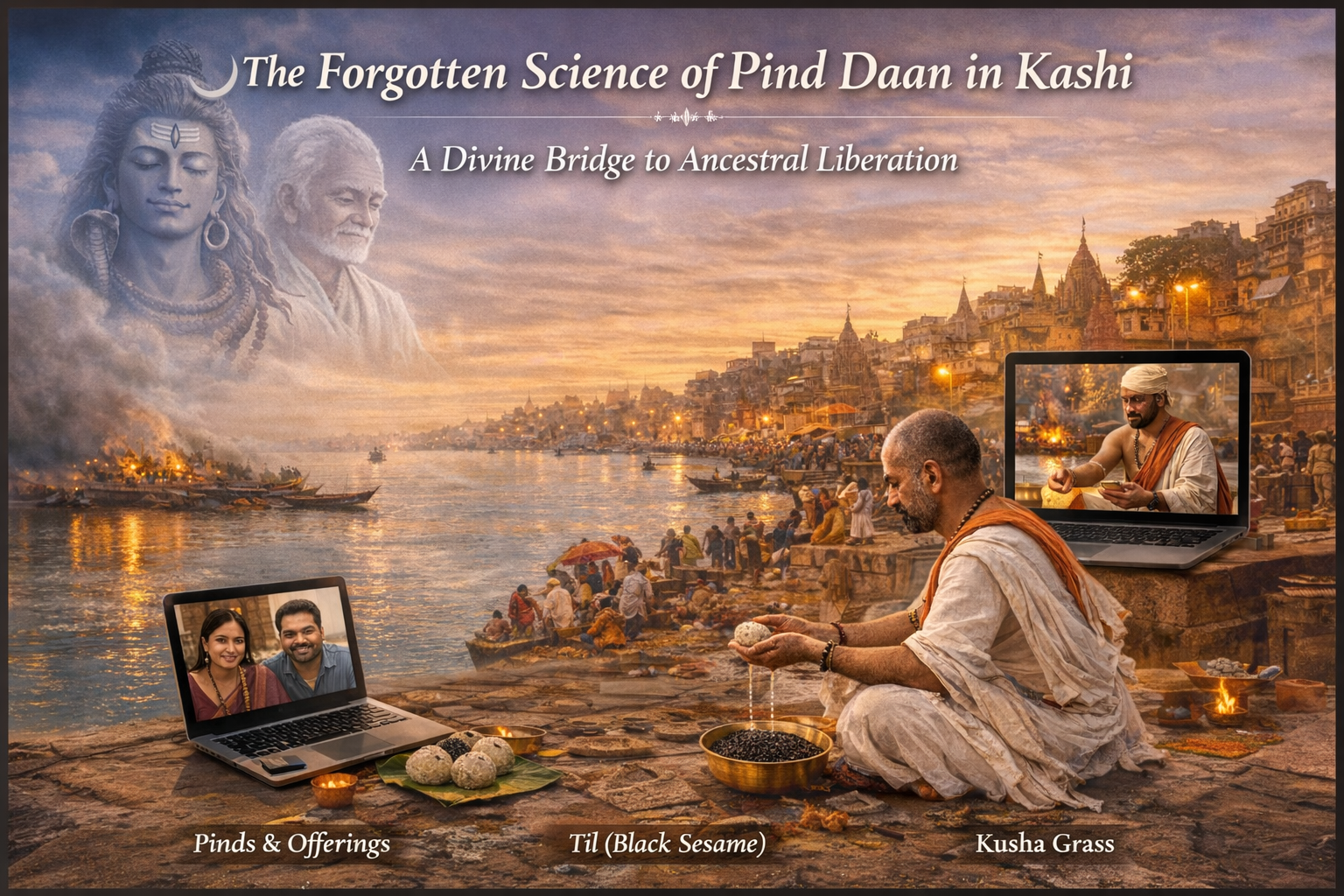
To the untrained eye, Pind Daan looks like a simple offering of food. To a Vedic Scholar, it is a sophisticated metaphysical process designed to nourish the "subtle body" (Sukshma Sharira).
1. The Pind (Rice and Flour Balls)
The Pind represents the physical body. By kneading cooked rice or barley flour with milk and honey, the Karta (performer) creates a symbolic vessel. This vessel is infused with the energy of the ancestors through specific Beej Mantras.
2. Til (Black Sesame Seeds)
Black sesame is a potent conductor of spiritual energy. In the Dharma Sindhu, it is mentioned that black sesame seeds have the power to absorb negative frequencies and satisfy the cravings of the departed souls, providing them the strength to move toward higher realms.
3. Kusha Grass (Desmostachya bipinnata)
Known as "Sacred Grass," Kusha acts as a spiritual insulator. During the ritual, the Karta wears a ring made of Kusha grass (Pavitri) on the ring finger. This prevents the high-frequency energy generated by Vedic chanting from being grounded into the earth, directing it instead toward the intended soul.
The Ritual Process: A Step-by-Step Vidhi in Kashi
Performing Pind Daan at the Manikarnika or Dashashwamedh Ghat follows a precise Vedic sequence:
Step 1: Snana (Purification)
The ritual begins with a holy dip in the Ganga. For those performing the ritual via Remote Sankalpa, our Acharyas sprinkle Ganga Jal on the ceremonial altar on your behalf.
Step 2: Sankalpa (The Solemn Vow)
This is the most critical part for NRIs. The Acharya invokes your name, gotra (lineage), and location. Even if you are in San Francisco, the vibration of your name in Kashi connects your energy to the ritual.
Step 3: Pinda Arpana
The offering of the Pinds. Each Pind is offered to a specific generation—father, grandfather, great-grandfather, and so on—reaching back seven generations.
Step 4: Tarpan
The pouring of water mixed with black sesame and white flowers over the Kusha grass. This "cools" the heat of the soul's desires, allowing them to let go of earthly attachments.
Overcoming the Distance: Remote Sankalpa for the Global Indian
We recognize the challenges of the diaspora. You want to honor your parents and grandparents, but professional commitments or visa restrictions might keep you away.
How Digital Shradh Works:
- Live Video Streaming: You join the ritual via a high-definition video call, seeing the Ganga and hearing the mantras in real-time.
- English-Speaking Acharyas: No more language barriers. Our pundits explain every step in fluent English, ensuring you feel the spiritual connection.
- Transparency: We provide a full breakdown of the materials used and ensure the Pinds are immersed in the Ganga with full dignity.
- Prasad Delivery: We ship the Maha-Prasad and sacred Raksha Sutra (thread) from the temple directly to your international doorstep.
Frequently Asked Questions
Can I perform Pind Daan if I am not physically present in Kashi? Yes. Through "Remote Sankalpa," an authorized priest performs the rituals on your behalf. The vibrations of the Vedic Mantras and the intention (Sankalpa) transcend physical distance, reaching the ancestors effectively as per the Dharma Sindhu.
What is the best time of year to perform these rituals? While Kashi is holy year-round, the Pitru Paksha (the fortnight of the ancestors) is the most potent time. However, performing Shradh on the death anniversary (Tithi) or during an eclipse is also highly recommended.
Do I need to know my Gotra to perform the ritual? Knowing your Gotra is ideal, but if you do not know it, the Acharya will use the "Kashyapa Gotra," as it is believed all of humanity originated from Sage Kashyapa.
Can women perform Pind Daan in Kashi? Yes. Modern Vedic interpretations and specific historical precedents allow women to perform these rites if there is no male heir, ensuring the lineage remains blessed and the ancestors are not neglected.
How long does the entire process take via video call? A comprehensive Pind Daan and Tarpana ritual typically takes between 45 to 90 minutes. We schedule these during your local daytime hours whenever possible, despite the time difference with India.