The ripples of the Ganga at Manikarnika Ghat carry more than just water; they carry the whispers of ten thousand years. For a Hindu soul, the cycle of life remains incomplete until the final debt—the Pitra Rin (ancestral debt)—is settled in the heart of Varanasi.
As the world pivots toward the digital, the ancient resonance of Kashi remains the only anchor for those seeking to bridge the gap between the material world and the ancestral realm. Whether you are standing on the stone steps of the Dashashwamedh Ghat or joining us via a Remote Sankalpa from New York or London, the spiritual gravity of Kashi remains absolute.
The Weight of the Unseen: Understanding Pitru Dosha
Many families face recurring obstacles—unexplained financial instability, chronic health issues, or a lingering sense of unrest within the home. In the Vedic tradition, these are often symptoms of Pitru Dosha.
When a soul departs, it transitions into the state of a Preta (a lingering spirit). Without the nourishment of Tarpana and the liberation of Pind Daan, the soul remains tethered to the earthly plane, unable to join the Pitrus (divine ancestors).
The Garuda Purana emphasizes the gravity of this responsibility:
"Putraat Trayate Iti Putrah" (A son is one who saves his ancestors from the hell called 'Put'.)
Ignoring these rituals isn't just a lapse in tradition; it is a disruption of your spiritual DNA.
The Science of the Pind: Why Rice, Sesame, and Kusha Grass?
Vedic rituals are often dismissed as symbolic, but they are deeply rooted in metaphysical alchemy. Every element used in a Kashi Pind Daan serves a specific energetic purpose:
1. The Pind (Rice and Flour Balls)
The human body is composed of Pancha Bhoota (five elements). The Pind represents the physical body of the ancestor. By offering cooked rice mixed with honey and ghee, we provide a "temporary vessel" for the soul to absorb the essence of our offerings.
2. Black Sesame Seeds (Kala Til)
In the Dharma Sindhu, black sesame is described as the favorite of Lord Yama. Scientifically, sesame seeds have the highest capacity to absorb and retain "Sattvic" and "Raja" frequencies, making them the perfect conductors for transmitting mantras to the subtle body of the deceased.
3. Kusha Grass (Desmotachya bipinnata)
Known as the "Purifier," Kusha grass is a natural insulator of spiritual energy. During the ritual, the Karta (performer) wears a ring of Kusha grass (Pavitri) to prevent the spiritual merit generated by the mantras from being grounded into the earth before it reaches the ancestors.
The Sacred Geography: Why Kashi is the "Mokshadayini"
While Pind Daan can be performed at home, the Skanda Purana declares that any ritual performed within the Panchakroshi (the sacred radius of Kashi) is amplified a thousandfold.
- Manikarnika & Harishchandra Ghats: The only places on Earth where the funeral pyre never goes cold. Here, Lord Shiva himself is said to whisper the Taraka Mantra into the ears of the departed.
- The Akshaya Vata (The Immortal Banyan): In the Kashi-Gaya circuit, this tree is believed to be the only living thing to survive the Pralaya (cosmic dissolution). Offerings made here reach the ancestors directly and permanently.
The Step-by-Step Vidhi: What to Expect
When you commission a ritual through SacredKashi, our Acharyas follow the strict Vaikhanasa and Shaiva traditions:
- Sankalpa: The most crucial step. You state your lineage (Gotra), your name, and the names of three generations of ancestors.
- Snana & Shuddhi: Purification using Ganga Jal.
- Pind Pradan: The creation of the Pinds and their placement on Kusha grass.
- Tarpan: The pouring of water mixed with milk and sesame over the thumb (the Pitra Tirtha of the hand).
- Visarjan: The final immersion of the Pinds into the holy Ganga, signifying the soul's release into the infinite.
Global Devotion: The "Remote Sankalpa" for NRIs
We understand that distance often prevents descendants from physically reaching the Ghats. However, the Vedic universe is not bound by geography.
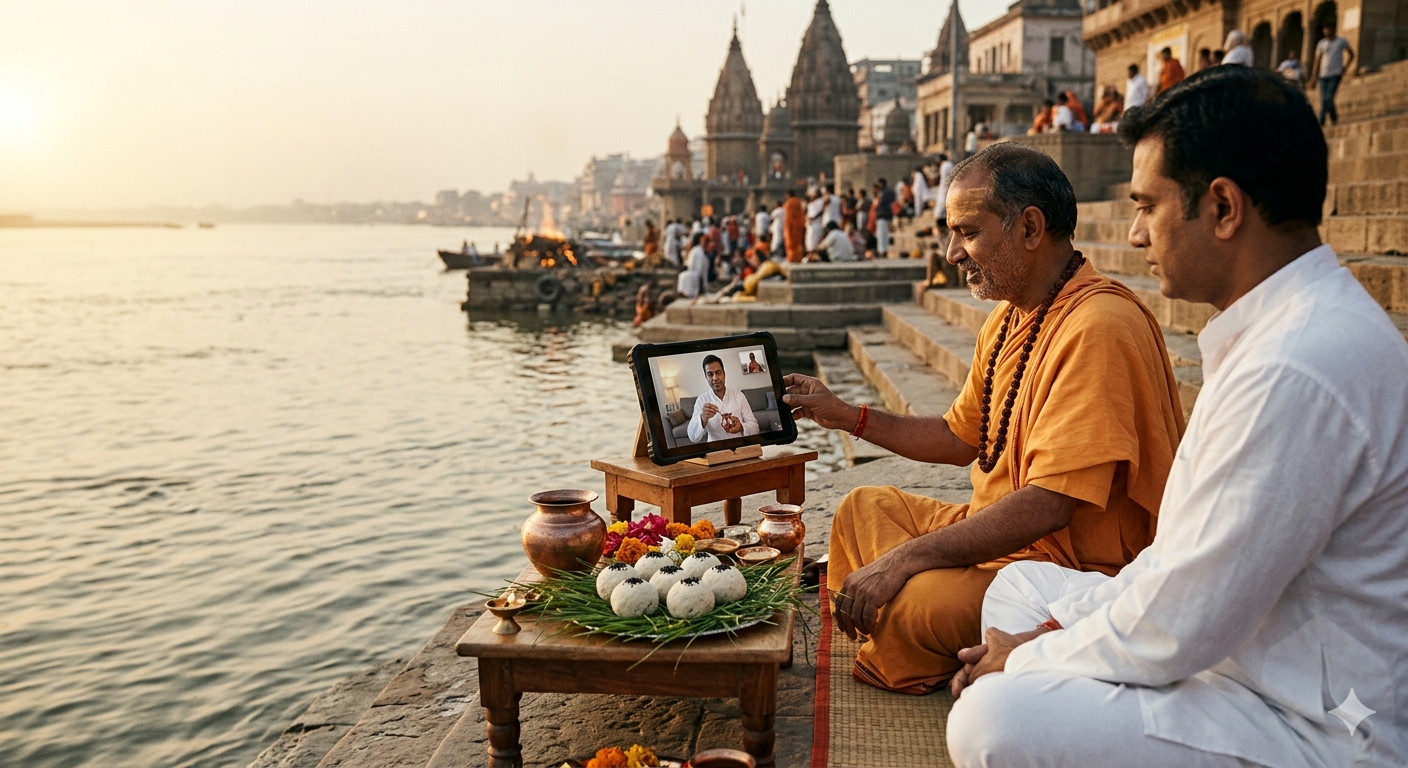
Through our Live Interactive Rituals, you participate via high-definition video call. Our English-speaking Pundits explain every Shloka in real-time. You perform the physical actions (like pouring water) at your home in synchronization with the Acharya at the Ghat in Kashi.
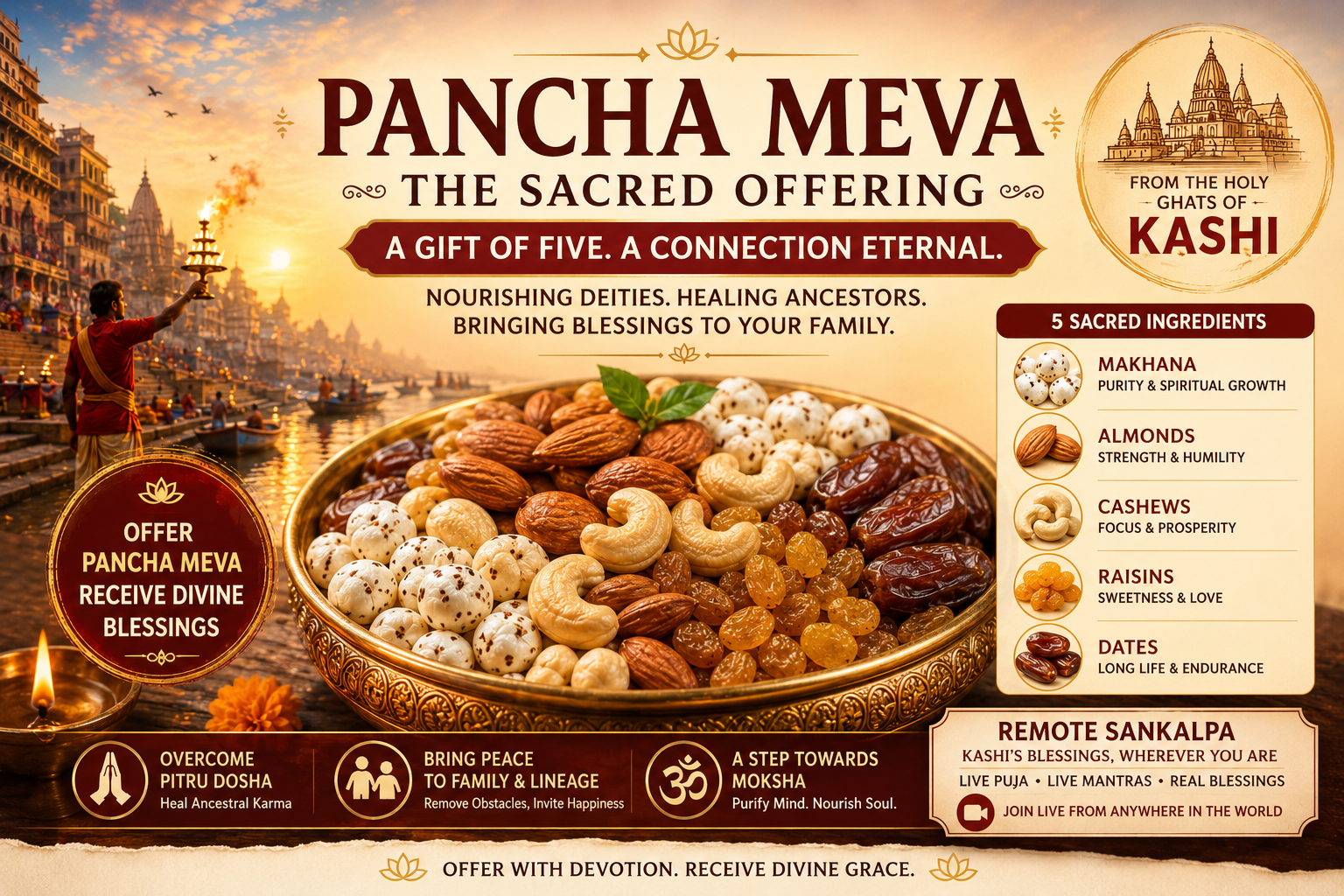
Trust & Transparency: We provide a full video recording of the ceremony, and the Prasad (usually dry fruits and sacred ash) is dispatched via international courier with end-to-end tracking.
Frequently Asked Questions (FAQ)
Can I perform Pind Daan if I don't know my Gotra? Yes. In cases where the Gotra is unknown, the Acharya uses the "Kashyapa Gotra," as Vedic scripture considers Rishi Kashyap the primordial father of all humanity.
Is Pind Daan necessary every year? While Varshik Shradh is performed annually, a full Pind Daan in Kashi is often a milestone ritual intended to provide permanent Moksha (liberation) to the soul.
Can women perform Pind Daan in Kashi? Yes. Modern Vedic scholarship and various Puranic precedents allow daughters to perform rituals if there is no male heir, ensuring the lineage remains blessed.
How long does the Kashi Pind Daan ritual take? A comprehensive ritual usually takes between 1.5 to 3 hours, depending on the complexity of the ancestral lineage being addressed.
Do I need to fast before the ritual? Yes, it is recommended that the Karta (the person performing the ritual) maintains a fast or consumes only fruits until the ceremony is completed.