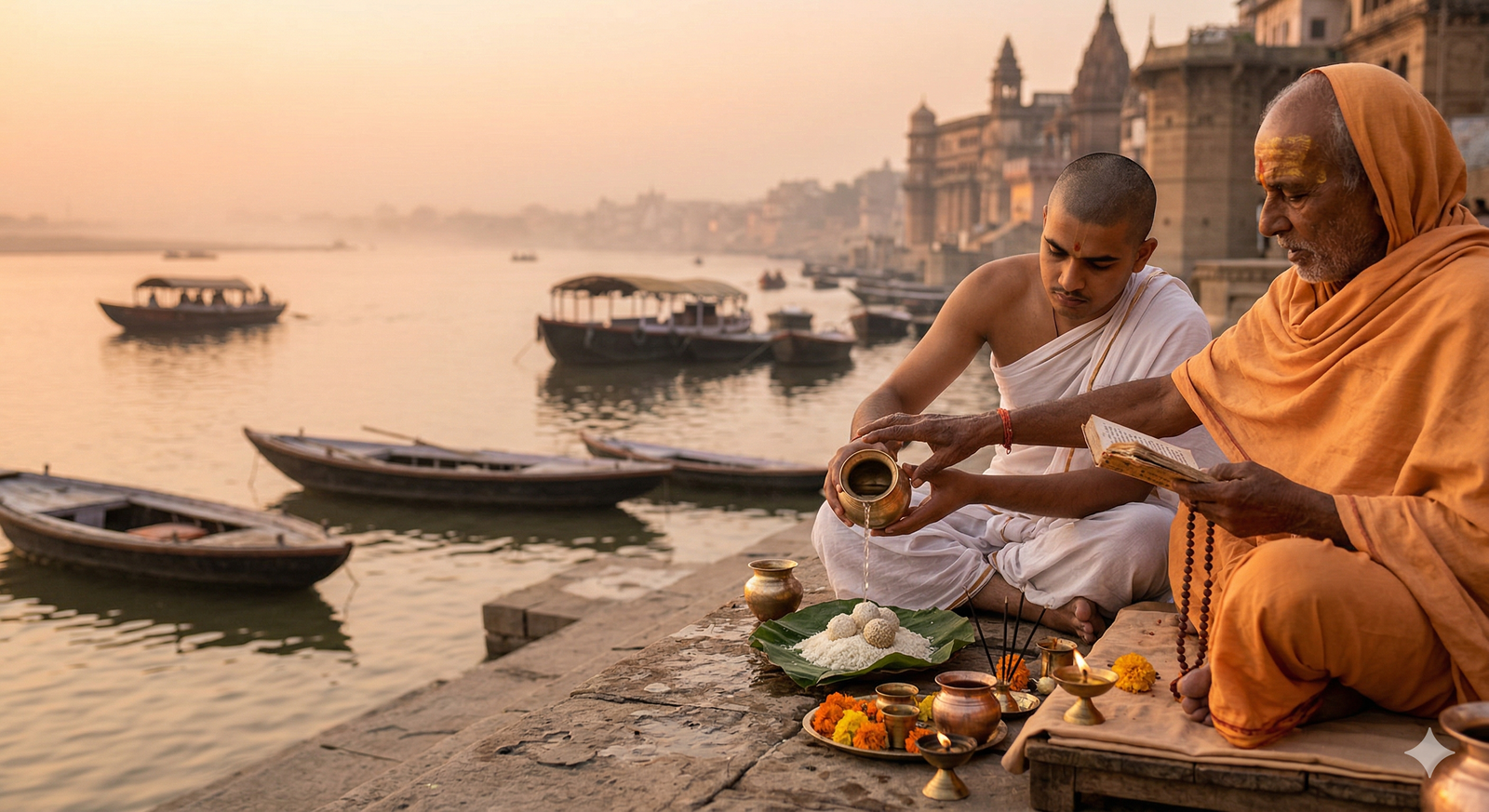
The weight of ancestral debt, known in the Vedic tradition as Pitru Rin, is a silent pull on the soul. Many families feel this through persistent obstacles, unexplained grief, or a sense of spiritual stagnation. In the heart of Bharat, two cities stand as the pillars of ancestral liberation: Varanasi (Kashi) and Gaya.
But for the modern seeker or the global NRI, a common dilemma arises: Where should I perform Pind Daan? Is Gaya the "final" destination, or does the eternal light of Kashi offer something more profound?
As we walk the stone steps of Manikarnika Ghat, the smell of burning incense mingling with the mist of the Ganga, we look to the Shastras to bridge the gap between ancient ritual and your family’s peace.
Understanding the Spiritual "Why": The Weight of Pitru Dosha
Before choosing a location, one must understand the metaphysical necessity of the ritual. According to the Garuda Purana, the soul remains in a state of Preta (restless spirit) until the living descendants offer the Pind (rice balls) and Tarpana (water offerings).
“Pinda-danena vidhina pitrnam tripti-hetave.”
(By the prescribed method of Pind Daan, the ancestors find satisfaction and liberation.)
If ignored, the energy of the lineage becomes "clogged." Pitru Dosha isn't a curse from angry ancestors; it is the karmic resonance of a lineage that has not been properly transitioned into the light.
Gaya: The Psychology of the "Final Release"
Gaya is often referred to as the "Tirtha of the Soul." Legend tells of the demon Gayasur, who performed such intense penance that Lord Vishnu granted him a boon: anyone who touched Gaya would be purified. Today, Gaya is the destination for the Gaya Shradh, specifically designed to end the cycle of rebirth for a particular ancestor.
The Role of the Phalgu River and Vishnupad Temple
In Gaya, the ritual is centered around the Vishnupad Temple, which houses the footprints of Lord Vishnu.
- The Power of Gaya: It is considered the Siddha Kshetra for releasing the soul from the Preta Yoni (the ghostly realm).
- The Finality: It is traditionally said that once a full Shradh is performed at the Akshaya Vata (the eternal banyan tree) in Gaya, no further annual Pind Daan is technically required for that specific soul.
Kashi: The Gateway to Mahamoksha (The Ultimate Liberation)
While Gaya is about "releasing" the soul, Kashi (Varanasi) is about "transforming" the soul. Kashi is the Avimukta Kshetra—the place Lord Shiva never leaves.
Why Kashi is Unique
In the spiritual hierarchy, Kashi sits at the apex. It is said that Lord Shiva whispers the Taraka Mantra into the ears of those who pass here, ensuring immediate Moksha (liberation from the cycle of birth and death).
- The Ganga Factor: Unlike the Phalgu in Gaya, which often flows beneath the sand, the Ganga in Kashi is perennial and purifying.
- Ancestral Elevation: Performing Pind Daan at Manikarnika or Dashashwamedh Ghat doesn't just satisfy the ancestor; it elevates the entire lineage's spiritual frequency.
- The Kashi Vishwanath Connection: The ritual is completed with the blessings of Mahadev, the destroyer of ego and time.
Comparison: Kashi vs. Gaya for Pind Daan
| Feature | Gaya (The Specialist) | Kashi (The Universal) |
|---|---|---|
| Primary Goal | Breaking the attachment to the earthly plane. | Attaining union with the Divine (Moksha). |
| Best For | Finalizing long-standing ancestral debt. | Ongoing spiritual merit and lineage cleansing. |
| Key Location | Vishnupad Temple / Akshaya Vata. | Manikarnika Ghat / Kashi Vishwanath. |
| Vedic Text | Vayu Purana / Gaya Mahatmya. | Kashi Khanda / Skanda Purana. |
| The "Feel" | Intense, focused, and final. | Expansive, compassionate, and eternal. |
The "Science" of the Ritual: Why Rice, Sesame, and Kusha?
Vedic rituals are not mere symbols; they are metaphysical technologies.
- Black Sesame (Til): These seeds are governed by Lord Yama and Shani. They act as "conductors" for the subtle energy of the Pitrus.
- Kusha Grass: Scientifically known for its ability to block certain types of radiation, in rituals, it acts as a spiritual insulator, ensuring the energy of the mantras is directed solely toward the Pind.
- The Pind (Rice & Milk): The rice represents the physical body, while the honey and milk represent the sweetness of memory and the nourishment of the soul.
Bridging the Distance: Remote Sankalpa for the Global Indian
For NRIs in the US, UK, or Australia, visiting the ghats of Varanasi or the temples of Gaya isn't always immediate. However, the Dharma Sindhu allows for the Pratinidhi (representative) system.
How Remote Pind Daan Works:
- Sankalpa via Video Call: You participate in the initial vow (Sankalpa) where your name, Gotra, and intention are announced by a Kashi Pandit.
- Ritual Execution: Our English-speaking Acharyas perform the full Vidhi at the Ganga, ensuring every Shloka is vibrated with precision.
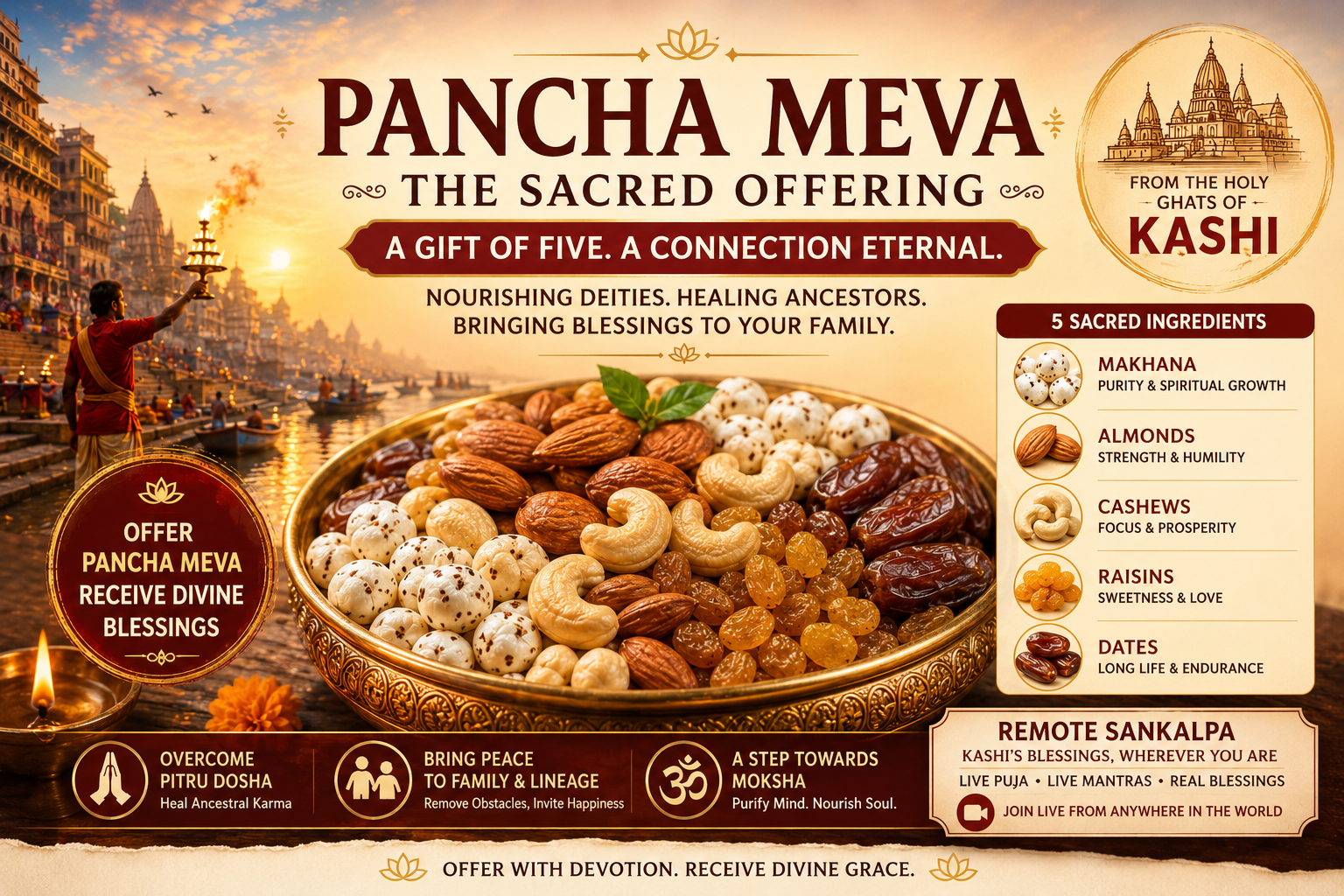
- Digital Evidence & Prasad: High-definition video recording of your specific ritual and the delivery of dry Prasad (like Bhabhuti or dry fruits) globally.
Frequently Asked Questions (FAQ)
1. Can I perform Pind Daan in Kashi if I haven't been to Gaya?
Yes. Kashi is a complete Moksha Puri. While Gaya is specifically for ancestral release, Kashi covers all aspects of spiritual liberation, making it a powerful standalone destination for Pind Daan.
2. What is the best time for Pind Daan in Kashi or Gaya?
The Pitru Paksha (the 16-day lunar period in September/October) is the most auspicious. However, Kashi is Nitya Tirtha, meaning any day is sacred for Pind Daan due to the presence of Lord Shiva.
3. Do I need to be physically present?
While physical presence is ideal for the experience, a Remote Sankalpa is Shastra-compliant. The intention (Sankalpa) of the descendant is the most critical element of the ritual.
4. What is the difference between Tarpana and Pind Daan?
Tarpana is the daily or periodic offering of water and sesame to satisfy the "thirst" of the ancestors. Pind Daan is a more formal ritual involving food offerings to provide the soul with a "subtle body" for its journey.
5. Can women perform Pind Daan in Kashi?
Yes. According to the Valmiki Ramayana, Mata Sita performed Pind Daan for King Dasharatha. In Kashi, women can perform these rituals with the guidance of an Acharya if there is no male heir.
Conclusion: A Lineage Healed
Whether you choose the focused intensity of Gaya or the eternal embrace of Kashi, the act of Pind Daan is a profound expression of love. It is the bridge you build for your parents and grandparents, leading them from the shadows of the past into the light of the divine.